Staring down another triple-digit forecast and a rising electric bill? You are not alone. In Phoenix, long, hot summers and intense afternoon sun make cooling your home a top priority. The good news is you can stay comfortable while using less energy by tackling a few smart upgrades in the right order. In this guide, you will learn practical steps that work in our desert climate, how to plan projects for the best ROI, and which improvements buyers notice when it is time to sell. Let’s dive in.
Why cooling leads in Phoenix
Phoenix’s extended hot season means cooling drives most summer electricity use. Afternoon heat and strong solar radiation push up demand, especially in late day periods when utilities see peak loads. That is why local programs often promote time-of-use plans that reward shifting energy use out of those peaks. Focusing on cooling efficiency first delivers the biggest comfort and cost benefits in our market.
Stop heat at the source
Windows and glass
West and south windows take the brunt of late-day sun. Reduce heat gain with a few options, from simple to more robust:
- Interior solar or blackout shades to cut glare and heat.
- Cellular shades for added insulating value.
- Reflective or solar-control window film to reduce solar gain.
- Exterior shading like awnings, exterior screens, or louvers. Exterior solutions block sun before it hits the glass, which is more effective than interior shades.
Upgrading old single-pane units to double-pane low-e windows can improve performance. The payoff depends on your window condition, orientation, and incentives.
Shade and landscaping
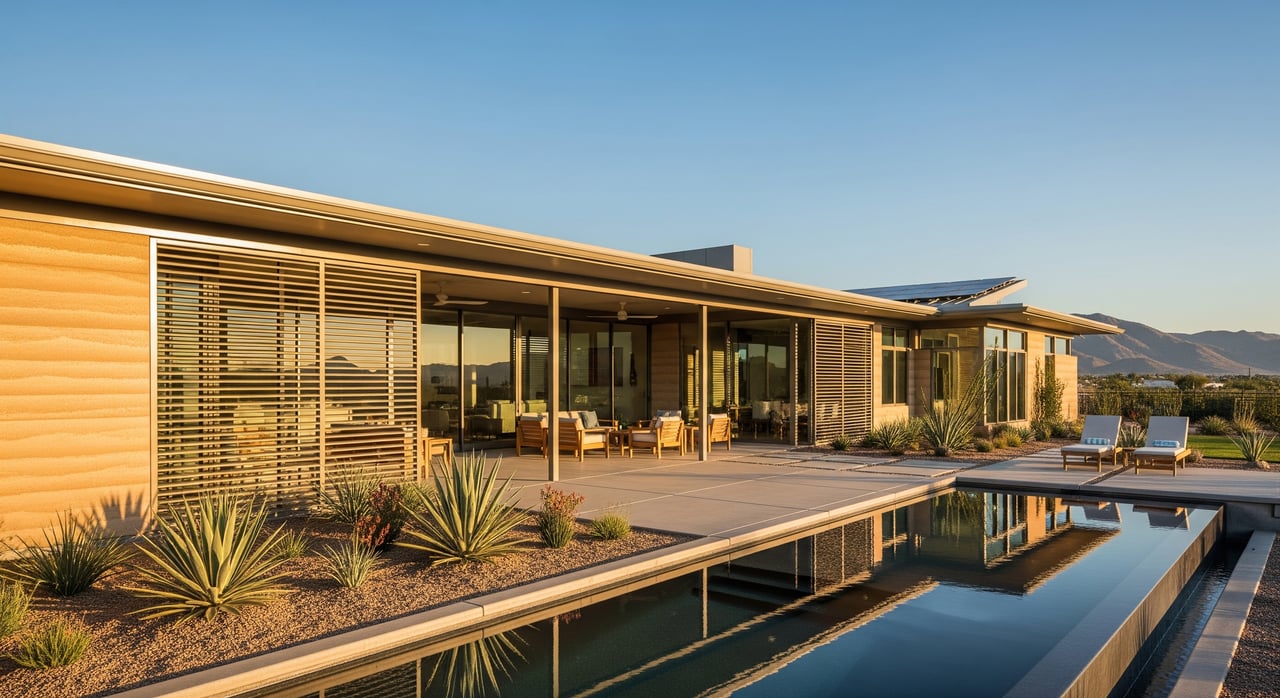
Well-placed shade lowers wall and window temperatures during peak hours. In Phoenix, use low-water trees and efficient irrigation. Place deciduous trees near south exposures and evergreen or dense shade near west and southwest sides to block harsh afternoon sun. Pergolas, retractable awnings, shade cloth, and exterior solar screens are strong additions for west-facing glass.
Roof and attic heat
Attic heat can drive indoor temps up fast. Focus on:
- Adequate attic insulation for hot-dry climates based on current guidance.
- Air sealing at attic penetrations to stop hot air infiltration.
- Radiant barriers on the underside of the roof deck to limit radiant heat transfer.
- Cool roof materials or coatings with higher reflectance to reduce attic temperatures. Results vary with roof color, insulation, and ventilation.
Tighten the envelope
Insulation and air sealing
Air leaks let hot air in and cooled air out. Seal gaps around plumbing and electrical penetrations, attic hatches, and recessed lights. Pair sealing with insulation upgrades where cost-effective. If your ducts run through an unconditioned attic, sealing with mastic and insulating to the right R-value can prevent major losses.
Smarter HVAC choices
Central AC efficiency
Modern systems with higher SEER or SEER2 ratings use less electricity for the same cooling output. Variable-speed units can improve comfort and lower runtime when installed correctly. Efficiency pays off most when the system is sized and commissioned to standards.
Heat pumps in hot climates
Today’s air-source heat pumps are strong performers for Phoenix cooling and can heat efficiently during mild winters. Check qualified efficiency thresholds and confirm that your installer is experienced with heat pump design and controls.
Evaporative coolers
In very dry conditions, evaporative coolers can use much less electricity than standard AC. They require regular maintenance and tend to be less common in tighter modern homes, but they can be an option for certain properties or zones.
Installation quality and sizing
Right-sizing and correct installation determine real-world savings. Ask your contractor for documentation:
- Manual J load calculation for sizing.
- Manual D for duct design if ducts are modified.
- Manual S for equipment selection.
Proper duct sealing, insulation, and airflow balancing are critical. Poor installation can erase the benefits of high-efficiency equipment.
Use controls and timing
Smart thermostat settings
A summer setpoint in the upper 70s works well for many homes. Raising the thermostat 7 to 10 degrees during long away periods can reduce energy use. Smart thermostats help you schedule setbacks, control settings remotely, and participate in utility demand programs.
Zoning and room-by-room solutions
Zoning with dampers or adding a mini-split to a hard-to-cool room can improve comfort without overcooling the whole house. This is useful for spaces with lots of glass or unique exposures.
Fans and practical habits
Ceiling and portable fans make you feel cooler, so you can set the thermostat a bit higher. Remember that fans cool people, not rooms. Turn them off when you leave a space.
Maintenance that matters
Replace filters on schedule, clean coils and condensate drains, and have a professional tune-up before peak season. Keep the outdoor condenser shaded from direct sun without blocking airflow, and clear debris within 2 to 3 feet around the unit.
Time-of-use and load shifting
Phoenix utilities often offer time-of-use plans and demand response options that reward shifting heavy use away from late afternoon and early evening. Consider:
- Running laundry and dishwashers outside peak windows.
- Scheduling pool pumps or EV charging during off-peak hours.
- Allowing a smart thermostat to slightly relax the setpoint during demand events while maintaining comfort overall.
These steps can lower bills and support grid reliability during extreme heat.
Rebates, credits, and timing
Incentives change, so check current offers before you start. Look at your utility’s rebates for efficient HVAC, heat pumps, duct sealing, insulation, and smart thermostats. Review city and state programs, and confirm available federal tax credits. Verify eligibility, required specs, approved contractors, and whether pre-approval is needed. Understanding incentives up front helps you pick the right scope and maximize ROI.
Upgrades that buyers notice
If resale is on your radar, prioritize improvements that show well and reduce ownership costs:
- High-efficiency HVAC or a modern heat pump with documented specs and service records.
- Sealed and insulated ducts in the attic.
- Upgraded attic insulation and verified air sealing.
- Cool roof materials or reflective re-roof.
- Quality window upgrades with low-e glazing where cost-effective.
- Smart thermostat with documented energy features.
- Water-wise landscaping, shade trees in strategic locations, and well-placed shade structures.
These features resonate with buyers in hot-climate markets and can strengthen your listing.
Document everything for resale
Keep invoices, permit records, equipment spec sheets, rebate confirmations, and maintenance logs. Good documentation builds buyer confidence and helps appraisers understand the value of your improvements.
Choose contractors with care
Quality varies widely. Protect your investment by asking for:
- Proof of licensing and insurance, verified with the Arizona Registrar of Contractors.
- Manual J load calculation, Manual D if ducts change, and Manual S for equipment choice.
- Permit and inspection details when required.
- A written warranty and a maintenance plan.
For envelope work, ask how air sealing will be verified. Blower-door testing or thermal imaging adds confidence and accountability.
Build your Phoenix game plan
- Start with no and low-cost steps: smart thermostat schedules, ceiling fans, shade management, and filter changes.
- Tackle air sealing, attic insulation, and duct sealing next to cut the cooling load.
- Evaluate HVAC upgrades once the envelope is in good shape, and align equipment choice with available incentives and your comfort goals.
- Add strategic shade and consider cool roof options during re-roof projects.
When you are weighing improvements for comfort today and resale tomorrow, a clear plan keeps you on budget and focused on what works in our climate.
Ready to prioritize upgrades that enhance comfort and appeal to buyers across Scottsdale, Arcadia, Paradise Valley, and the greater Valley? Connect with The Real Estate Experts of Phoenix to align your home strategy with the market and position your next move with confidence.
FAQs
What is a good summer thermostat setting in Phoenix?
- Many homes are comfortable in the upper 70s, and raising the setpoint 7 to 10 degrees during long away periods can reduce cooling energy use.
Are heat pumps a smart choice for Phoenix homes?
- Yes. Modern air-source heat pumps cool efficiently in hot climates and can handle our mild winter heating, especially when properly sized and installed.
How much can shade trees actually help in Phoenix?
- Well-placed, low-water trees that shade west and south exposures can meaningfully cut afternoon heat gain and improve comfort when mature.
When should I replace an older AC unit in Phoenix?
- Consider age, efficiency rating, repair history, and duct condition. Upgrading from very old, low-SEER equipment to modern high-efficiency systems can lower energy use when installed correctly.
How do time-of-use plans lower bills in the Phoenix area?
- TOU plans charge less during off-peak hours. Shifting laundry, pool pumps, and EV charging away from late-afternoon peaks can reduce your monthly costs.
Which upgrades add resale value in hot-climate markets?
- Documented high-efficiency HVAC or heat pumps, attic insulation and air sealing, sealed ducts, cool roof materials, low-e windows where cost-effective, and smart thermostats are standouts for buyers.