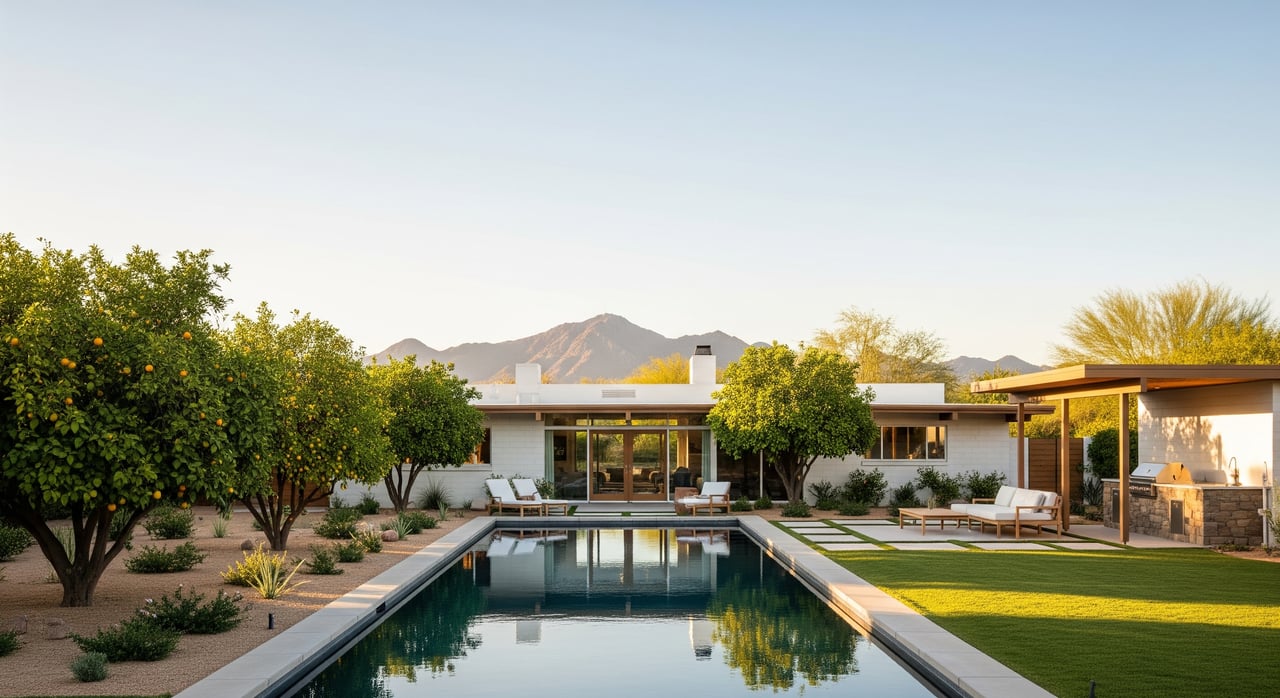
Thinking about buying in Arcadia and torn between a townhome and a house? You are not alone. Both options put you close to Camelback Mountain, top dining, and central Phoenix conveniences, but they deliver very different costs and day-to-day experiences. In this guide, you will learn how the numbers and lifestyle compare in Arcadia so you can choose with confidence. Let’s dive in.
Quick take: townhome vs house in Arcadia
Arcadia is one of Phoenix’s most sought-after neighborhoods, and land value plays a big role in pricing. Single-family homes often command a premium because of larger lots and private outdoor space. Townhomes usually offer a lower entry price and lower exterior upkeep, but they come with HOA rules and dues.
On monthly costs, a townhome’s HOA may replace some maintenance you would handle yourself in a house. Your total cost depends on the specific property’s price, HOA scope, insurance, utilities, and how much yard or pool care you want. The best move is to compare two real homes side by side.
What drives costs in Arcadia
Purchase price and land value
In Arcadia, detached houses generally sell for more than townhomes due to lot size, privacy, and redevelopment potential. Prices vary with home size, condition, views, and whether the lot is a teardown opportunity. In a neighborhood where land is scarce, that extra space often drives a meaningful premium.
Property taxes in Maricopa County
Maricopa County assesses property taxes based on county valuation and multiple taxing districts. Effective residential rates typically fall in the low-to-mid 0.5 to 0.8 percent range of assessed value, but bills vary by parcel. Always check the parcel’s history and current assessment before you finalize your budget.
HOA dues and what is covered
Most townhomes include an HOA. Typical dues in the Phoenix area range from about $150 to $500 or more per month depending on amenities and services, such as exterior maintenance, landscaping, community pools, and insurance coverage for exteriors. Many single-family homes in Arcadia do not have an HOA, though some newer infill subdivisions do. Review CC&Rs, budgets, reserve studies, and any special assessment history to see true long-term costs.
Insurance differences
Townhome owners often benefit from a master HOA insurance policy that covers building exteriors, which can reduce the owner’s interior policy cost. Detached homeowners insure the full structure, which can increase premiums. Confirm exactly what the HOA covers, where your policy starts, and whether any additional coverage is recommended for your situation.
Utilities and operating costs
Water and landscape costs are a big factor in Phoenix. Townhomes usually have smaller yards and lower irrigation needs. Detached homes with larger yards and pools can expect higher water, irrigation, and pool service costs. Energy bills depend on the home’s insulation, HVAC efficiency, and shade from mature trees.
Maintenance and capital expenses
Townhome HOAs often handle roof, exterior paint, and common area care. Owners handle interiors and some limited exterior components. Detached homeowners take on all exterior items, including the roof, HVAC, landscaping, pool, and driveway. That adds flexibility and privacy, but it also means more planning for long-term capital items.
Lifestyle fit: how living feels day to day
Space and layout
Houses typically provide more interior square footage, larger bedrooms, and more storage. Many Arcadia homes include private yards, shade trees, and room for a pool. Townhomes trade some space for convenience, often with multi-story layouts that maximize living area on a smaller footprint.
Privacy and noise
Detached homes offer more separation from neighbors and no shared walls. Townhomes can include shared walls or close spacing, which may raise the potential for noise transfer. Newer construction can add sound-mitigating features, so it is smart to compare specific builds.
Outdoor living
If you want a private pool, outdoor kitchen, or expansive lawn, a house is usually the better fit. If you prefer low yard work and are happy with a community pool or shared green, a townhome can deliver a lock-and-leave lifestyle.
Parking and storage
Houses often provide private garages and driveways, with room for extra vehicles depending on local rules. Townhomes may have smaller garages and more limited guest parking. Review community parking policies and storage options before you decide.
Walkability and commute
Arcadia’s central location puts you close to restaurants, shopping, and outdoor trails. Exact walkability varies by block and address. Proximity to key arterials helps with access to central Phoenix and Scottsdale, but you should test your own commute patterns during typical traffic.
Financing, resale, and future potential
Financing differences to know
Many townhomes finance similarly to single-family homes, but some communities are legally structured more like condominiums. That distinction can affect loan options and project approvals. Confirm the property type with your lender and title team early so there are no surprises.
Resale and buyer pool
Detached homes in Arcadia tend to attract a broader buyer pool and may capture more long-term land-driven appreciation. Townhomes appeal strongly to buyers seeking convenience, lower maintenance, or an Arcadia location at a lower price point. Resale strength for townhomes depends on HOA quality, maintenance, and scarcity of comparable units.
Redevelopment and expansion
Arcadia’s larger lots create teardown and rebuild opportunities that can significantly increase value. Detached homes allow more flexibility for additions, pool installations, and landscape projects, subject to city permits. Townhomes have limited expansion and redevelopment potential due to HOA rules and shared land.
Rental rules and investment notes
HOAs may restrict rentals, including short-term and long-term options. Investors should review rental caps, minimum lease terms, and registration rules carefully. In Arcadia, townhomes can offer lower acquisition cost, while single-family lots may deliver stronger appreciation over time.
Side-by-side comparison
| Factor | Townhome | House |
|---|---|---|
| Entry price | Typically lower than detached homes in Arcadia | Typically higher due to lot size and land value |
| HOA dues | Common, often about $150 to $500+ per month depending on amenities | Many homes have no HOA, some infill homes do with lower dues |
| Property taxes | Based on assessed value; effective rates often about 0.5 to 0.8 percent | Same tax framework; exact bill depends on the parcel |
| Insurance | Often lower if HOA master policy covers exteriors | Owner insures full structure, usually higher than a townhome |
| Utilities | Lower landscape water needs; no pool to service in many cases | Larger yards and pools can increase water and energy costs |
| Maintenance | Exterior handled by HOA in many communities; owners cover interior | Owner handles roof, exterior, landscaping, pool, and systems |
| Outdoor space | Limited private yard; community amenities substitute | Larger private yard, shade trees, and space for a pool |
| Privacy | Shared walls or close spacing possible | No shared walls, greater privacy |
| Parking | May have smaller garages and limited guest parking | Private garage and driveway, more flexibility |
| Expansion | HOA and lot constraints limit additions | Room to add or rebuild with permits |
Build your Arcadia cost worksheet
Use this quick checklist to compare two properties on true monthly and annual cost. Fill in real quotes and documents for each address.
- Purchase price and loan terms: Include down payment, rate, and estimated closing costs from your lender.
- Property taxes: Pull parcel-specific history and current assessment from county records.
- HOA dues and coverage: Note monthly dues, what is covered, reserve strength, and any special assessments.
- Insurance: Confirm what the HOA master policy covers and get owner policy quotes for interiors or full structure.
- Utilities: Estimate water and irrigation, electric for cooling, and any gas service.
- Maintenance: Budget for landscape care, pool service if applicable, and periodic items like HVAC and roof.
- Capital reserves: Set aside funds for larger items, based on age and condition.
- Commute and lifestyle: Add any trade-offs that matter to you, such as parking, storage, and access to amenities.
Local checks before you buy
- Zoning and permits: Verify City of Phoenix zoning, lot coverage, and permit needs for additions or pools.
- HOA documents: Review CC&Rs, bylaws, rules, budgets, reserve studies, insurance, and any litigation history.
- School boundaries: Confirm school assignments by exact address using district resources.
- Flood and environment: Review FEMA flood maps and consider shade, insulation, and HVAC efficiency.
- Market context: Look at neighborhood comps, days on market, and inventory to gauge competition and pricing.
How to decide: three buyer profiles
- Lock-and-leave lifestyle: If you value low maintenance, community amenities, and simplified ownership, a townhome can deliver the Arcadia location with fewer chores.
- Space and privacy first: If you want a private yard, room for a pool, and flexibility to add on later, a detached home is likely your best fit.
- Value and future upside: If you care about land-driven appreciation or potential redevelopment, a single-family lot often offers more long-term upside in Arcadia.
The bottom line
A townhome in Arcadia gives you convenience and a lower entry price, with HOA-based maintenance that simplifies life. A house offers more space, privacy, and land value, along with higher direct responsibility for upkeep. The right choice depends on your budget, how you want to live, and your long-term plans.
If you want a clear, property-by-property comparison and local numbers, our team can help you run a side-by-side worksheet and interpret HOA docs, taxes, and permit paths. Start a conversation with The Real Estate Experts of Phoenix and get tailored guidance for your Arcadia move.
FAQs
What costs differ most between Arcadia townhomes and houses?
- Townhomes usually trade HOA dues for reduced exterior maintenance, while houses have higher direct costs for landscaping, roof, and pool care.
How do property taxes work in Arcadia and Phoenix?
- Maricopa County sets taxes by parcel with effective residential rates often around 0.5 to 0.8 percent of assessed value, but exact bills vary by address.
Do townhomes in Arcadia appreciate as well as houses?
- Detached homes often capture more land-driven appreciation over time, while townhome appreciation depends on location, HOA quality, and scarcity.
Are townhomes better for lock-and-leave living?
- Yes, HOAs often handle exteriors, landscaping, and common areas, which makes townhomes convenient for frequent travelers or second-home owners.
Can I add a pool or expand a townhome in Arcadia?
- Expansion options are typically limited by HOA rules and lot size, while detached homes provide more flexibility subject to city permits.